
Employees also benefit from understanding retained earnings, as these funds can be used for operational improvements, employee benefits, and job security. Companies that effectively manage and reinvest their retained earnings are often better positioned to offer competitive salaries, invest in employee development, and create a stable work environment. https://amcwindow.com/estimate-vs-invoice-what-are-the-major-differences/ Both types of accounts are integral to a comprehensive analysis of a company’s financial position.
- At the conclusion of the company’s accounting period, such earnings that are retained become reported.
- Balancing these considerations is key to maintaining a healthy symbiotic relationship between these two critical components of shareholder equity.
- Let us understand how retained income statement is useful for an organization and what it indicated about the financial health of the organization through a couple of examples.
- By analyzing these components, stakeholders can gauge a company’s operational efficiency, growth potential, and investment attractiveness.
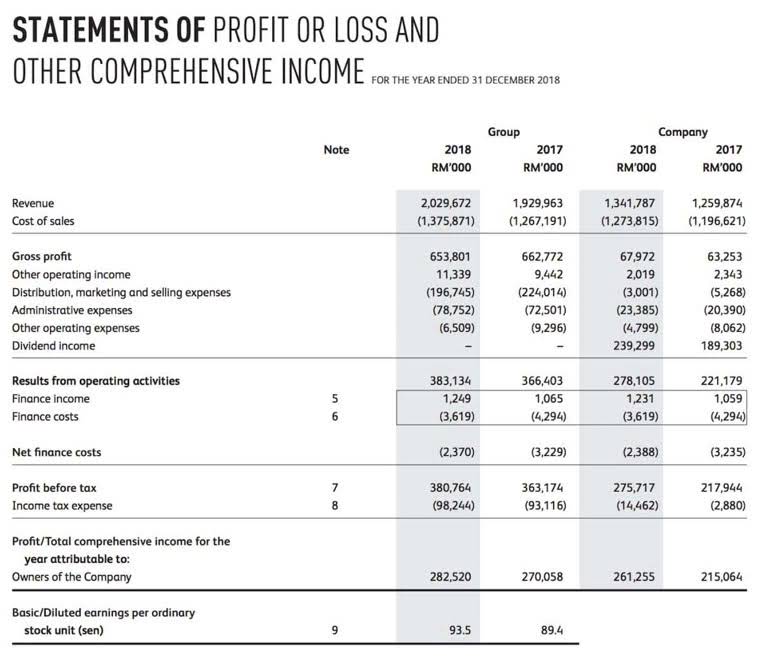
- The income statement will list a net income figure that might appear to be the same as retained earnings , however it is not.
- Retained earnings are considered an important concept concerning a company’s financial statements.
Retained Earnings vs Net Income

From the perspective of a business owner, contributed capital represents the initial investment made by the company’s owners or shareholders. This can be in the form of common stock, preferred stock, or other equity instruments. When a business is first established, contributed capital is injected to provide the necessary funds for operations, expansion, and development. It serves as the company’s financial foundation, helping to cover startup costs, acquire assets, and gross vs net fund day-to-day operations. Contributed capital is a crucial concept in accounting and finance, as it represents the funds that owners or shareholders contribute to a company in exchange for ownership stakes. It is an essential component of a company’s balance sheet, alongside retained earnings.
Net income vs. retained earnings
- The balance reflects the total earnings that have not been paid out to shareholders as dividends.
- In between the opening and closing balances, the current period net income/loss is added and any dividends are deducted.
- These earnings are considered “retained” because they have not been distributed to shareholders as dividends but have instead been kept by the company for future use.
- The beginning retained earnings of the Company ABC Inc. is $500,000, the company had a net income of $100,000 and paid a dividend of $50,000 to the shareholders.
- Contributed capital, on the other hand, represents the funds raised by the company from shareholders through the issuance of stock.
Retained earnings, at their core, are the portion of a company’s net income that remains after all dividends and distributions to shareholders are paid out. Some companies offer stock options or equity grants to employees as part of their compensation packages. Retained earnings can be used to fund these programs, aligning the interests of employees with those of shareholders. Dividends must then be subtracted out from these earnings as they are paid out to stockholders. At the end of the period, you can calculate your final Retained Earnings balance for the balance sheet by taking the beginning period, adding any net income or net loss, and subtracting any dividends.
Statement of Retained Earnings: Definition, Importance, and Components
In Note 6 to the financial statements on page 56, we see there were in fact four million shares (rounded) issued to employees as part of their non-cash compensation. A $0.05 par value would be $200,000, well below the rounding limit on these financials. In any case, the increase to owners’ equity as a result of additional paid-in capital during 2019 was $11.001 million. The company faced pressure from shareholders to return part of its massive retained earnings balance to investors. Apple responded by initiating a dividend and share buyback program, which was seen as a way to reward shareholders while still retaining enough capital to fund innovation and growth.
- These earnings represent the accumulated profits that have been reinvested back into the business rather than being distributed to shareholders as dividends.
- The board of directors might be considering a range of options, from investing in research and development to launching a new product line or paying out dividends.
- From the perspective of a financial analyst, retained earnings are a key indicator of a company’s financial health and operational efficiency.
- Investments in new projects, equipment, or other capital expenses can reduce retained earnings as funds are allocated towards growth and expansion.
- Reporting and disclosing retained earnings is a pivotal aspect of understanding the financial health of a company.
- For shareholders, the importance of retained earnings lies in the potential for increased shareholder value over time.
By examining this statement, stakeholders can understand the factors influencing changes in retained earnings and make informed decisions based on the company’s financial performance. At the conclusion of the company’s accounting period, such earnings that are retained become reported. They will either continue to be accumulated and be positive, or they can which is a subcategory of retained earnings? shift into negative territory and be recorded as a deficit. These changes in earnings from one accounting period to the next are not directly noted. It is easy to infer them by looking at the totals of ending and beginning retained earnings for the accounting period.


Moreover, contributed capital serves as a cushion against potential losses, as it represents the initial investment that shareholders are willing to risk. In financial modeling, it’s necessary to have a separate schedule for modeling retained earnings. The schedule uses a corkscrew-type calculation, where the current period opening balance is equal to the prior period closing balance. In between the opening and closing balances, the current period net income/loss is added and any dividends are deducted.